Here’s something that happens more often than it should: a playdate is coming up, you’ve spent twenty minutes mentally planning snacks, and you end up defaulting to the exact same crackers-and-fruit combo you always do anyway. Because by the time the kids show up, you’ve got a dozen other things going on, and the snack planning window just closed.
Snacks at playdates have this strange way of feeling more complicated than they are. You don’t want to put out a bowl of chips and call it a day, but you also don’t have the bandwidth to make something from scratch on a Wednesday afternoon. The gap between those two things is where most of the stress lives.
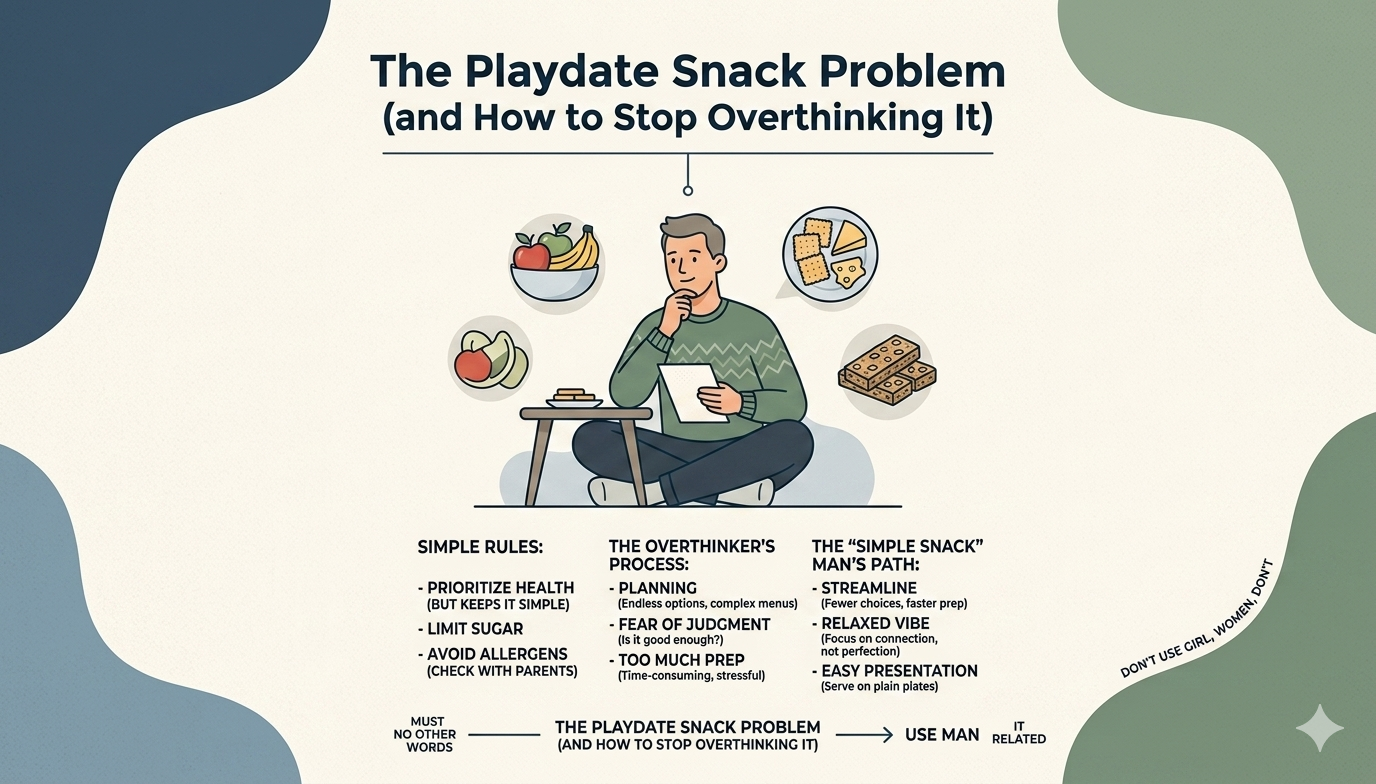
So the most useful thing you can do is close that gap before the playdate actually happens. Keeping a short working list of healthy snack ideas for playdates takes the decision out of the moment entirely. You know what works, so you keep those ingredients on hand, and when the day comes, you’re pulling from memory instead of starting from scratch.
Why the Snack Actually Matters
Kids at playdates are burning through energy faster than usual. There’s the excitement, the social effort, the physical play. Snacks don’t just fill the hunger gap; they affect how the whole afternoon goes. A sugar-heavy snack midway through doesn’t help anyone. Kids get a quick lift and then, sometime around the forty-five-minute mark, things start to go sideways.
The American Academy of Pediatrics recommends pairing fruit or vegetables with a protein source or whole grain to make snacks more sustaining. So apple slices on their own are fine, but apple slices with cheese or a thin spread of nut butter do more work. The pairing extends how long kids feel full and keeps the energy more even.
That doesn’t mean snacks need to be nutritionally engineered. It’s more of a loose guiding principle: add something alongside the fruit, offer a vegetable if you can get away with it, and skip the stuff that’s mostly packaging.
The Snacks That Actually Get Eaten
Handheld is king. Kids at playdates are not looking to sit down and use a plate. The snacks that disappear are the ones they can grab and keep moving. Small finger foods, things that don’t require utensils, and options that come in natural portions tend to win every time.
Fruit is the reliable base. Berries, melon chunks, and halved grapes need minimal prep and work across age ranges. Cucumber slices and carrot sticks hold up well if you cut them the night before and store them in a container. Cheese cut into cubes or served with whole-grain crackers gives the pairing that makes the snack more filling without adding a lot of work.
Smoothies are worth having in the rotation if the group is younger. Blend yogurt, milk, and frozen fruit and pour into small cups before the kids arrive. They feel like a treat. They take about five minutes. The younger set especially doesn’t care that they’re nutritious.
And then there’s the visual thing. The CDC notes that offering a variety of colorful fruits and vegetables can help kids eat more of them. A mix of colors on a small tray or in a little cup genuinely performs better than the same foods arranged plainly. You don’t need to spend time on presentation, but a bit of variety goes a long way.
Building the Shortlist
The goal isn’t to rotate through twenty different snack ideas. It’s good to have five or six things you trust, that you can keep stocked, and that you know the kids will eat. When you find something that works, you stick with it until it stops working.
Keep it to things that require ten minutes or less of prep. Cut fruit and veg the night before. Pull cheese and crackers straight from the fridge. Make a smoothie in advance and refrigerate it. If the snack requires anything more than that, it probably won’t happen consistently, which means it doesn’t actually solve the problem.
Anyway, the point isn’t to find the perfect snack. It’s to stop making the decision fresh every time. A short list you trust does more for playdate hosting than any individual recipe.